Early Promises, Quiet Warnings, and Political Crossovers
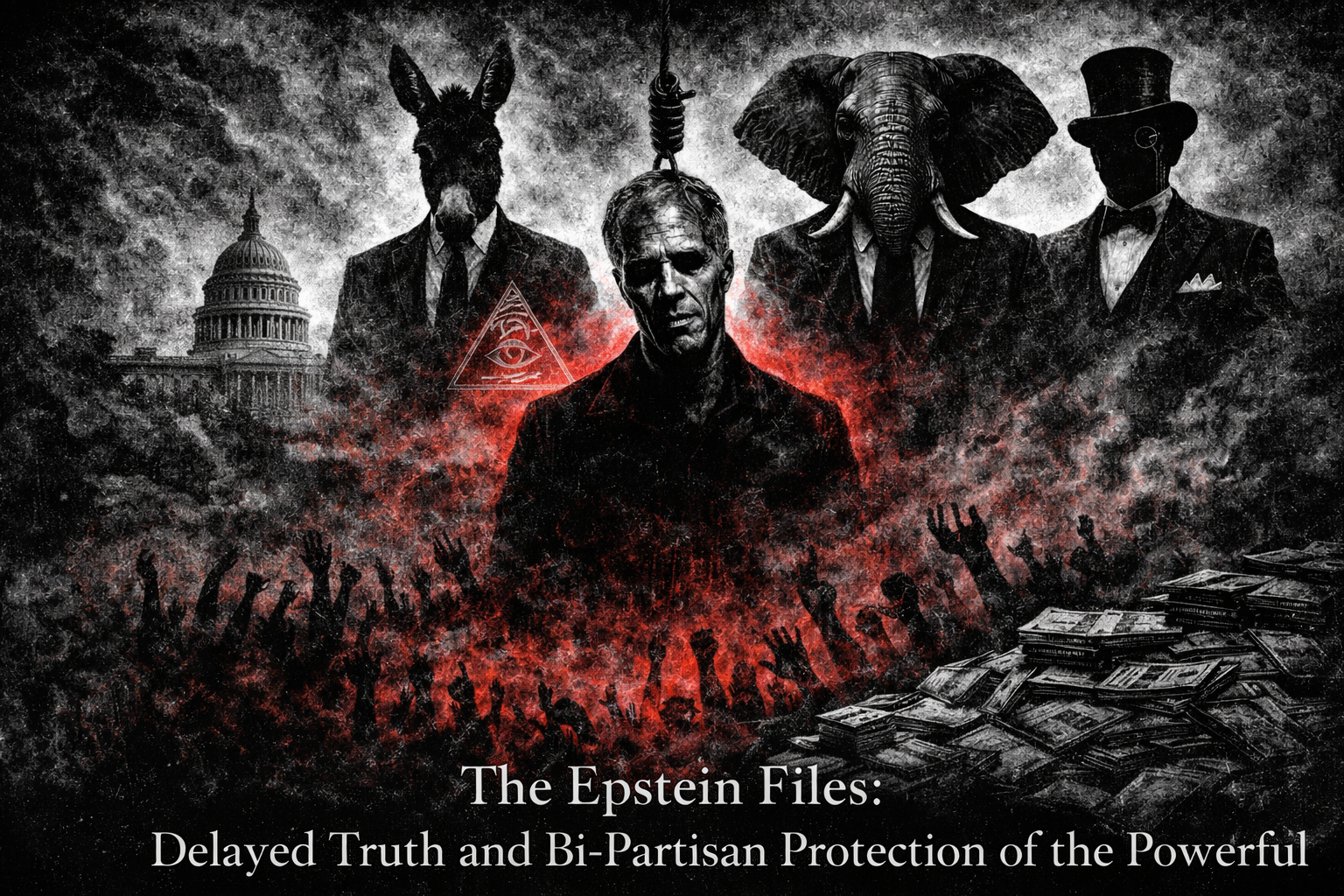
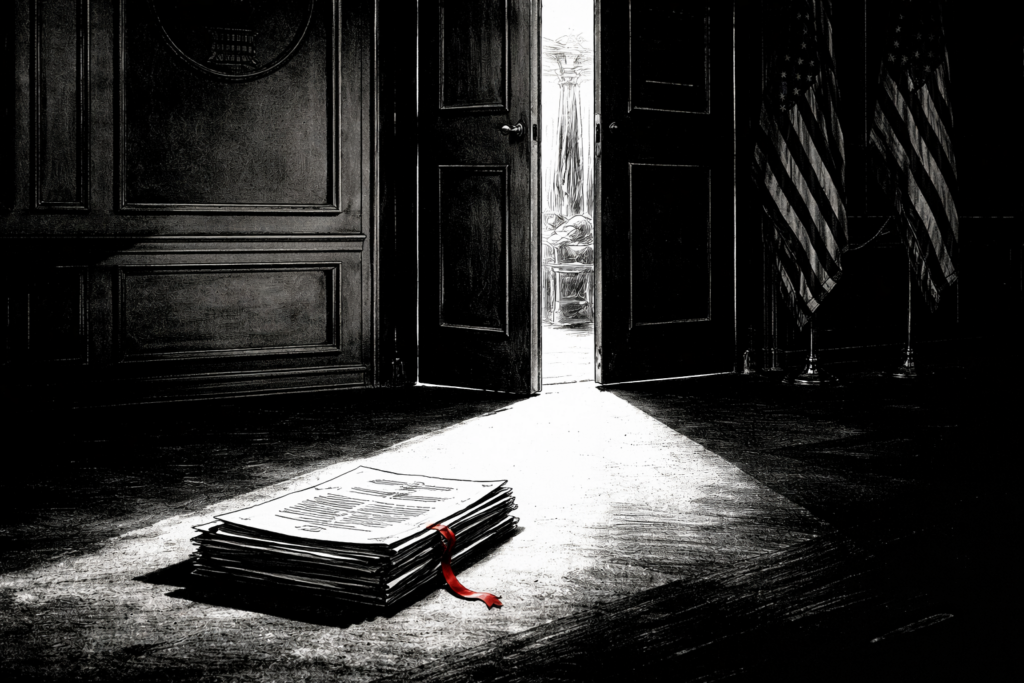
Donald Trump recaptured the presidency in January 2025. Boom! This instantly rekindled hopes among his supporters. They thought the secrets of Jeffrey Epstein’s exploits, and his powerful friends, would finally come to light. On the 2024 campaign trail, Trump had signaled he would open up all the government’s Epstein files. Soon after taking office, his newly appointed attorney general, Pam Bondi, threw fuel on the fire! She suggested on live TV that an Epstein “client list” was literally sitting on her desk. That was a dramatic tease! Many expected imminent revelations, an explosion of truth! In reality, what followed was a pattern of hesitation and obfuscation. A pattern that cut right across partisan lines.
Behind closed doors, a quiet warning came in May 2025. Bondi privately told President Trump that his own name appeared “multiple times” in the Epstein case files under review by the Justice Department and FBI. Serious stuff. She and Deputy Attorney General Todd Blanche immediately recommended against any broad public release of those documents. They cited the inclusion of child sexual abuse material and sensitive personal information of victims. Trump acquiesced. He told Bondi he would defer to the Justice Department’s judgment not to release additional Epstein files. (Later, when reporters pressed him about Bondi’s warning? Trump denied being told his name was in the files! He dismissed the entire issue as “fake news” concocted by his foes. Big denial.)
It’s worth noting: when Epstein’s abuses occurred, Trump was often a Democrat. He traveled in the same elite circles as Epstein’s other friends. In fact, Trump switched his party affiliation to Democrat in 2001 and remained a registered Democrat for the next eight years. He even mused in 2004 that he “identified more as a Democrat” at the time. This historical footnote is crucial. It underscores how Epstein’s web of influence spanned political lines – Trump, Clinton, and others partied in the same New York and Palm Beach social scene. The Epstein scandal was never going to be a neatly partisan affair, no matter how much each side prefers to blame the other.
The “Special Redaction Project” and Systemic Coverup
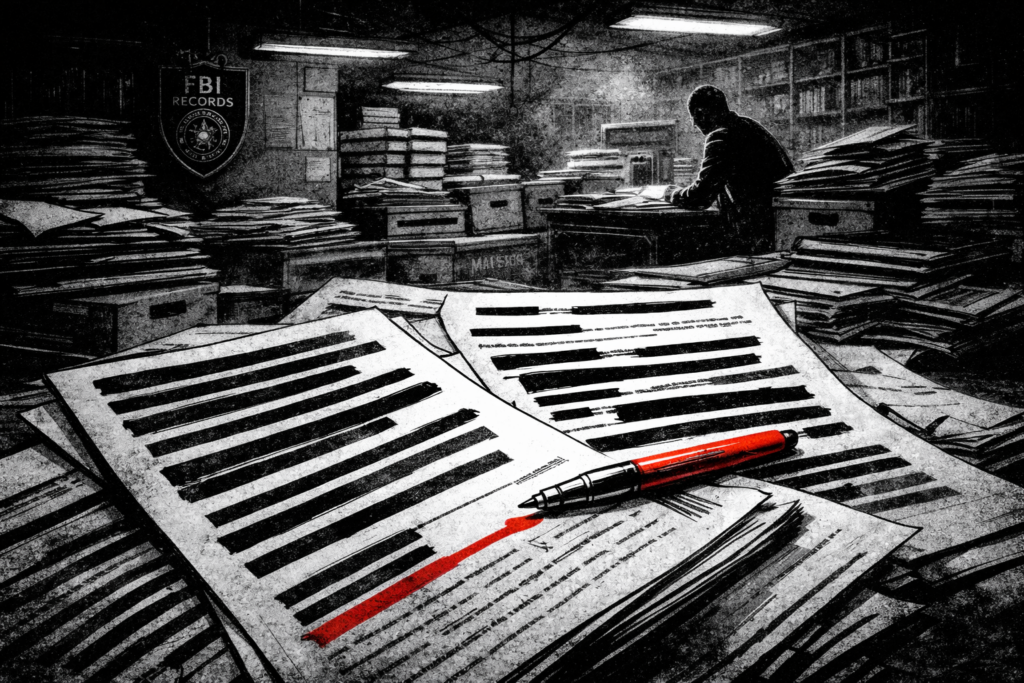
Even as Bondi was publicly hinting at bombshell evidence, the FBI was racing behind the scenes. They were sanitizing Epstein’s files! Internal correspondence later revealed that FBI Director Kash Patel (installed by Trump) launched an all-hands effort in early 2025. The goal? To review and heavily redact Epstein-related records in case of a forced disclosure. The bureau’s Winchester, VA records facility became ground zero. Agents dubbed it the “Epstein Transparency Project” or the “Special Redaction Project.”
Patel ordered roughly 1,000 FBI personnel to undergo a crash course in redaction techniques. Between January and July, the Bureau racked up nearly $1 million in overtime costs on Epstein file review. There was a frantic redaction sprint in March 2025 alone, accounting for over 70% of those overtime hours. Unbelievable dedication to censorship! Emails obtained via FOIA show newly appointed FBI deputy director (and Trump ally) Dan Bongino was looped into these efforts on literally his second day in office.
The implementation of the Epstein Files Transparency Act has resulted in what can only be characterized as a flagrant and systemic coverup within the American legal apparatus. The statutory deadline for the full release of these records was December 19, 2025. The resulting disclosure, however, represented only a minuscule fraction of the required material. It fell far short of the transparency mandated by law.
Publicly, officials justified the painstaking vetting by citing the need to remove child pornography and protect the privacy of victims. In May, Bongino assured the public that “voluminous amounts of downloaded child sexual abuse material” and victim statements had to be handled correctly, even as he acknowledged the public’s desire for transparency. But skeptics wondered: was something, or someone, else being protected? Indeed, once Bondi informed Trump that his own name surfaced in the trove, the administration’s enthusiasm for “full transparency” seemed to evaporate overnight.
On July 7, 2025, Bondi abruptly announced that the Justice Department’s exhaustive review had uncovered no incriminating “client list” after all. She declared the Epstein case effectively closed and said no further files would be released. This reversal shocked many of Trump’s populist supporters, who felt betrayed after months of promises. Red flags immediately went up: only weeks earlier Bondi had boasted of explosive secrets, and the FBI had been urgently redacting documents by the truckload. Now the official line was that nothing of prosecutorial value was found! To critics, it looked like a classic Washington cover-up. One seemingly engineered to protect high-profile figures from both parties.
The Department of Justice (DOJ) has engaged in indefensible redaction practices. They completely blacked out hundreds of pages, specifically documents 6109, 6209, and 6309, without providing the legally required justifications to Congress. This level of obfuscation extended to a 119-page grand jury indictment! That indictment remained entirely redacted despite a federal court order explicitly demanding that these records be made public. Such actions suggest a clear “playbook” where the administration takes previously available information, applies heavy redactions, and then presents it as a new, transparent disclosure.
The administration’s approach has been further marked by a calculated effort to scrub specific political figures from the record. Reports indicate that thousands of agent hours and nearly a million dollars in overtime were dedicated specifically to redacting Donald Trump’s presence in the files. A notable instance of this manipulation involved file 468, a previously unseen photograph of Trump. It was briefly published, then deleted from the public database, and only restored after intense public scrutiny and massive backlash.
Congress Intervenes: A Transparency Law and a Shutdown Showdown
Bondi’s July announcement and the administration’s stonewalling galvanized an unusual left-right coalition in Congress to force the issue. Within days, bipartisan legislation was introduced in the House to compel the release of all Epstein files. The Epstein Files Transparency Act was sponsored by liberal Democrat Ro Khanna and conservative Republican Thomas Massie. An unlikely pairing! It reflected a shared frustration with the Justice Department’s secrecy.
Yet GOP leadership, closely aligned with Trump, resisted the bill at every turn. House Speaker Mike Johnson, one of Trump’s staunch allies, used his powers to stall the proposal for months, even keeping the House of Representatives in recess for weeks to delay a potential vote.
That fall, a new obstacle emerged: a federal government shutdown in October 2025 over unrelated budget disputes. Johnson seized on the shutdown as a pretext to prolong the House recess. He thereby froze a procedural maneuver (a discharge petition) that reform-minded lawmakers were using to force a vote on the Epstein files bill. This was raw procedural hardball! The Speaker even refused to swear in a newly elected House member (a Democrat whose signature was needed to hit the 218-signature threshold) until the government reopened. In short, the transparency legislation was literally being held hostage to the federal funding impasse, underscoring how far the President’s allies would go to keep the Epstein files buried.
Johnson publicly argued there was no need for a law since a House committee was supposedly investigating Epstein anyway. (The House Oversight Committee had indeed obtained “tens of thousands of pages” of Epstein-related emails and evidence, including a “salacious drawing” Trump had once sent Epstein for his birthday. Those materials hinted at embarrassing connections, but did not satisfy demands for full disclosure.) Privately, however, even some Republicans grew uneasy with the optics of blocking the Epstein files. Four GOP representatives broke ranks and joined every Democrat in signing the discharge petition. The dam was about to break.
Ultimately, the dam did break. After 21 days, the October shutdown ended and the House reconvened. On November 12, 2025, Khanna and Massie’s discharge petition finally secured the 218th signature, over Speaker Johnson’s objections. Facing overwhelming bipartisan pressure, House leaders relented and scheduled a vote. The result was a lopsided 427–1 House vote to release the files (the lone dissenter was a Republican). The Senate followed suit by unanimous consent. Even President Trump, sensing the political winds, reversed his stance! He quickly signed the Epstein Files Transparency Act into law on November 19, 2025. What his administration had spent months resisting had become inevitable. The new law gave Attorney General Bondi 30 days (until December 19, 2025) to make “all unclassified records, documents, communications, and investigative materials” on Epstein and his associates public in a searchable database, with only narrow exceptions for protecting victims and truly classified intel.
Deadline Day: A Partial Dump and Missing Pieces
December 19, 2025, was supposed to be the day of full truth! Instead, the Justice Department released a cache of Epstein files on the deadline, but it immediately drew fire. It was incomplete and heavily redacted. Thousands of pages of documents, photos, and records were posted to a DOJ website, but journalists and lawmakers noted that vast swathes of text were blacked out and, curiously, very few documents mentioned Donald Trump at all, despite his well-known friendship with Epstein.
By the DOJ’s own admission, the initial dump was only a partial release. Bondi’s team said more would trickle out in coming weeks, well past the law’s 30-day deadline. In other words, the DOJ failed to comply with the letter of the law. They missed the date and withheld an unknown number of records. This decision, made unilaterally by the very officials who had fought disclosure, sparked bipartisan outrage.
Democratic House Minority Leader Hakeem Jeffries blasted the DOJ’s foot-dragging! He called for a “full and complete investigation” into why the release “fallen short of what the law clearly required.” Representative Khanna, co-author of the law, went so far as to suggest Attorney General Bondi should be impeached for defying Congress’s mandate. Even some Republicans echoed frustration that the spirit of transparency was being flouted. The law had required DOJ to either release everything or provide detailed justifications for any withheld items within 15 days; instead, weeks of silence and selective disclosures followed, completely eroding trust.
Furthermore, the release appears to be heavily curated. A calculated move to highlight political enemies while protecting others. For example, the DOJ included a long-public fundraiser photograph featuring Bill Clinton and Michael Jackson, but redacted the children in the image as if they were Epstein’s victims! This inclusion of non-relevant, public information under the guise of sensitive material points to a combination of incompetence and deliberate deception.
The controversy deepened the weekend after the release. Tech-savvy observers noticed something alarming: at least 16 images and documents vanished from the DOJ’s public Epstein files website shortly after they were posted. Among them was that photograph of Epstein’s desk in his Manhattan townhouse (evidence photo #468) in which two pictures of Donald Trump are visible. The unexplained removal of that image set off a firestorm. Congressional Democrats on the Oversight Committee publicly accused the administration of scrubbing the files to protect Trump, calling it “a White House cover-up.”
By the next day, the Justice Department restored the Trump-related photo to the online database. Their explanation was unusual: DOJ said it had temporarily pulled the image “out of an abundance of caution” after prosecutors flagged that it might contain identifiable victims, but after review they “determined there is no evidence that any Epstein victims are depicted” and thus reposted it unaltered. Deputy AG Todd Blanche insisted the removal “had nothing to do with President Trump” and that DOJ was simply responding to concerns from victims’ advocates about possibly under-redacted photos.
To be fair, victims’ rights groups did raise serious complaints about the initial release, but for the opposite reason one might expect. Prominent attorney Gloria Allred, who represents several Epstein survivors, admonished DOJ for under-redacting certain files: she pointed out that some victims’ full names and even photographs were erroneously left exposed in the document dump. One Epstein accuser wrote to DOJ that it was galling her name was published without warning when for years she had been denied access to her own file. The optics were terrible all around. DOJ was being lambasted for over-redacting names of VIPs, and being chastised for under-redacting sensitive victim info.
Blanche defended the slow, rolling disclosure. He argued that the statute also obligates DOJ to protect victims, implying that meeting the deadline would have meant reckless unmasking of private details. But the law’s supporters retorted that DOJ had had plenty of time (almost a year since Trump’s election, and decades since the crimes) to prepare the files properly. To them, the eleventh-hour concern for victims looked conveniently like a smokescreen to shield political allies.
Institutional failures are also evident in the handling of related evidence and personnel. The Bureau of Prisons (BOP) footage, for instance, is riddled with inconsistencies, jump cuts, and unexplained sightings of individuals. Additionally, Ghislaine Maxwell reportedly received a special waiver from the DOJ to serve her sentence in a comfortable facility for which she does not qualify, despite being a convicted sex criminal. These ongoing violations of the law and the continued “drip-feeding” of redacted information ensure that the truth regarding the Epstein case remains largely obscured.
Allegations have even surfaced that political tampering skewed the redactions. A hot-mic rumor made the rounds in September 2025 that an acting DOJ official quipped about blacking out “all Republican names” while leaving Democrats’ names visible in the Epstein documents. Jeffrey Epstein’s own brother claimed in a televised interview that he was told Trump officials were “scrubbing the files to take Republican names out,” essentially sabotaging the release.
These claims remain unproven, but they highlight a climate of profound mistrust. Members of Congress have formally asked the FBI to explain the chain-of-custody and integrity of the Epstein evidence, demanding assurances that nothing has been altered or destroyed during the months of secret review. In one pointed letter, a congressman noted the “rich and powerful have not been held accountable” and warned against “selectively releasing and withholding files” to protect officials of any party. The Justice Department, for its part, has not commented on these tampering allegations. They stick to the line that any delays or redactions were done solely to comply with the law and protect the innocent. But after so many twists, few observers are taking DOJ’s word at face value.
Who’s Who in the Files: Democrats, Republicans, and Royalty
One reason the Epstein case has transfixed the public: so many prominent names are implicated across the political spectrum! The files and prior court evidence make clear that Epstein cultivated relationships with elites of all stripes:
Democrats
- Former President Bill Clinton stands out among Epstein’s associates. Clinton famously flew on Epstein’s private jet (the “Lolita Express”) numerous times, and his name appears throughout Epstein’s schedules and contacts.
- The December document release even included photographs of Clinton apparently relaxing in Epstein’s company – one newly public image shows Bill Clinton in a hot tub with Epstein’s confidante Ghislaine Maxwell and a young woman, circa the early 2000s.
- Other Democrats surfaced as well: former New Mexico Governor Bill Richardson and ex-Senator George Mitchell, for instance, were named in prior legal filings by Epstein accusers (allegations they have denied).
- The Epstein files also contain correspondence involving Larry Summers, a Treasury Secretary under Bill Clinton, and Reid Hoffman, the billionaire LinkedIn co-founder and major Democratic donor. These documents don’t implicate them in crimes, but they underscore Epstein’s broad network among influential Democrats.
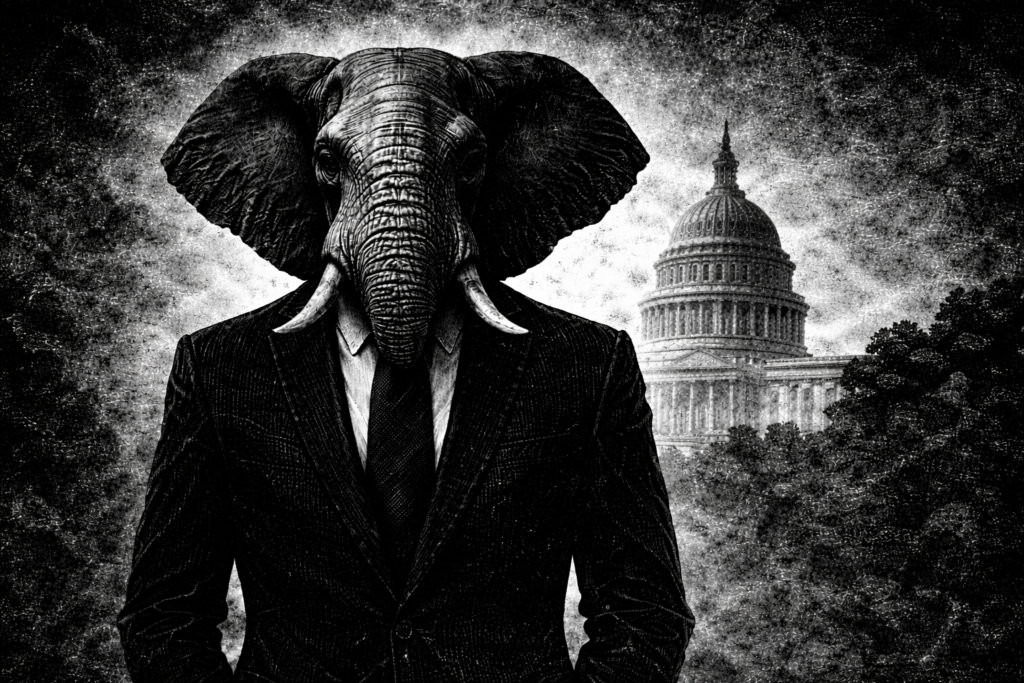
Republicans
- The most notable Republican in Epstein’s orbit is Donald Trump himself, Epstein’s friend and social neighbor in Palm Beach for many years (before a falling-out around 2004).
- Trump’s name appears multiple times in the Epstein case files reviewed by the FBI and DOJ, although officials have stressed that mere appearances of a name are not evidence of wrongdoing.
- In fact, one newly revealed 2019 email from Epstein to a reporter cryptically stated that “Trump knew about the girls,” though Epstein did not elaborate on what he meant. Given Trump’s high office, any hint of his awareness or involvement has been explosive.
- Another Republican-adjacent figure in the files is Steve Bannon, Trump’s onetime strategist – emails released by a House committee show Epstein corresponding with Bannon in 2019, suggesting even Trump’s inner circle stayed in contact with Epstein.
- It’s also worth recalling that key players in Epstein’s 2008 sweetheart plea deal included Republicans: Alex Acosta, the U.S. Attorney who approved Epstein’s non-prosecution agreement (and who later became Trump’s Labor Secretary), and Ken Starr, the former GOP special prosecutor who quietly served on Epstein’s defense team. Epstein had a knack for ensnaring GOP and Democratic luminaries alike.
Global Elite
- Epstein’s reach extended beyond American partisans. British royalty, for example, became embroiled in the saga via Prince Andrew (formally Andrew Mountbatten-Windsor).
- Andrew was a frequent Epstein companion and was accused by Virginia Giuffre of sexual abuse (he settled her civil claim without admitting fault). The files include Andrew’s name in emails and visitor logs, and his disgrace has been so total that the King stripped him of his titles.
- High-profile international figures such as former Israeli Prime Minister Ehud Barak and billionaire business leaders also pop up in Epstein’s records, reflecting how his black-book of contacts spanned continents.
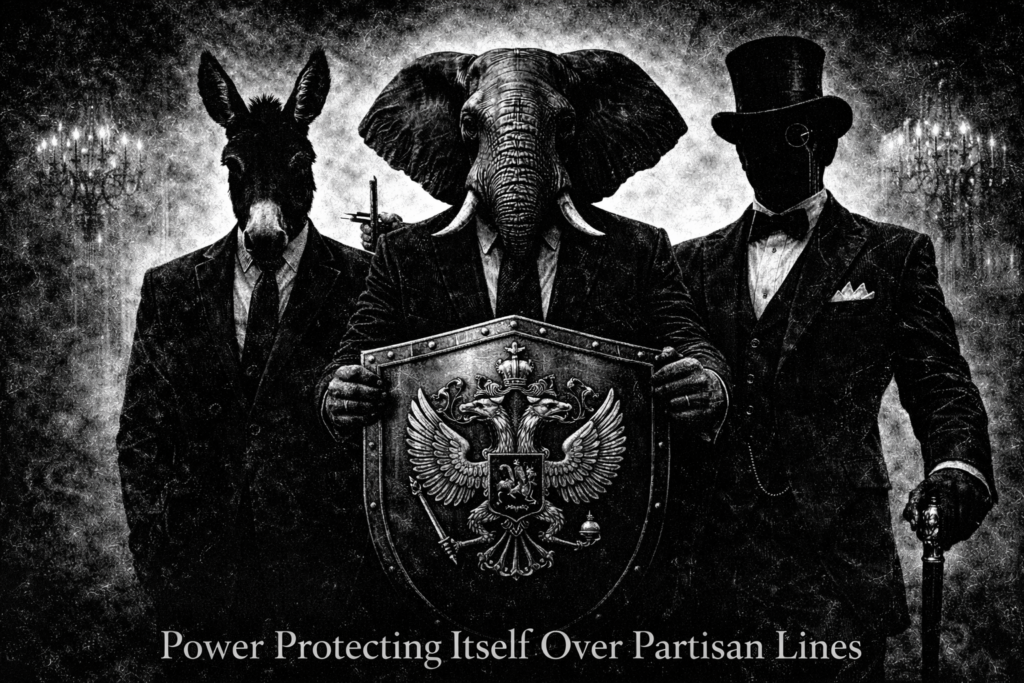
Crucially, Trump’s past life as a Democrat underscores the incestuous nature of this elite world. During the height of Epstein’s activities in the early 2000s, Trump and Clinton were not in opposing camps at all – they were fellow members of the Manhattan and Mar-a-Lago jet set. Partisan affiliation was fluid (Trump himself was a Democrat from 2001 to 2009), and Epstein’s rolodex was ecumenical in its inclusion of power players. This context makes it harder for either major party to claim the moral high ground. The Epstein scandal is less about left vs. right than it is about top vs. bottom: the elite protecting their own.
The tortuous saga of the Epstein files, from Trump’s campaign promises to Bondi’s backtracking, from the FBI’s secret “Special Redaction Project” to Congress’s forced hand, and finally to the begrudging, partial release and its aftermath, reveals a sobering truth. America’s political establishment, both Republican and Democrat, has repeatedly prioritized the protection of powerful figures over full accountability. Each twist in this story has featured lofty rhetoric clashing with self-interested reality. Republicans stalled and sabotaged a transparency law ostensibly to guard a Republican president, even as many of Epstein’s most scandalous connections were with Democrats. Democrats now decry a “cover-up,” but some were notably quiet when Epstein’s crimes first came to light years ago, perhaps because their own leaders were implicated. In the end, the impulse to shield the elite transcended party affiliation.
This entire saga suggests a massive bamboozling of the American public. Trump has consistently shown to be the opposite of what many who supported him thought he was. It’s an infuriating deception, reminiscent of how America was bamboozled by Big Pharma before, but this time by the very president that helped get that Big Pharma powerplay into action in the first place.
To be clear, the Epstein files did finally begin to see sunlight thanks to rare bipartisan unity and public pressure. Yet the initial document dump, dumped on the last possible day, rife with redactions, and apparently curated to spotlight certain individuals while obscuring others, has satisfied almost no one. It has instead reinforced cynicism that the system is still covering for its friends. Behind closed doors, the real secret is this: neither the left nor the right actually cares about full exposure. They don’t want to expose the beloved leaders of their failed two-party system. If they truly cared, they would be shouting this from the rooftops! Instead, it’s just the few who have followed this case through its entirety, not just the bandwagon jumpers, who remain dedicated to the truth.
As one observer quipped, “If you’re a billionaire with friends in high places, justice bends to accommodate.” The fact that Ghislaine Maxwell (now a convicted sex trafficker) was interviewed by Trump’s DOJ only to exonerate Trump of any misconduct, and immediately afterward received a transfer to a more comfortable prison, is a stark example of how favors get traded at the top. It’s the kind of quid pro quo that breeds public distrust.
Rather than a cathartic exposure of Epstein’s darkest secrets, the 2025 release saga became a mirror held up to America’s ruling class. We saw partisanship weaponized not to illuminate the truth, but to obscure it. We saw #ReleaseTheFiles T-shirts on the far right, and outraged speeches on the left, but behind closed doors the instinct… it remains.
Sources
- ABC News.
“Pam Bondi Told Trump His Name Appeared Multiple Times in Epstein Files, Sources Say.”
ABC News, May 2025. - Reuters.
“Trump Says He Will Defer to Justice Department on Release of Epstein Files.”
Reuters, May 2025. - Associated Press.
“Trump Campaign Promised Epstein Transparency, Administration Later Backed Off.”
Associated Press, January 2025. - Federal Election Commission.
“Voter Registration and Party Affiliation Records of Donald J. Trump.”
Public records, New York and Florida, 2001–2009. - New York Times.
“Trump’s Shifting Political Identity Over the Years.”
New York Times, archival reporting. - Reuters.
“FBI Conducted Extensive Review of Epstein Records Ahead of Possible Disclosure.”
Reuters, June 2025. - The Daily Beast.
“Inside the FBI’s ‘Special Redaction Project’ for the Epstein Files.”
Daily Beast, July 2025. - House Committee on Oversight and Accountability.
“Transcribed Interview and Document Production: Epstein-Related Evidence.”
U.S. House of Representatives, 2025. - The Guardian.
“US Lawmakers Force Vote to Release Epstein Files After Months of Delay.”
The Guardian, November 2025. - Congressional Record.
“Epstein Files Transparency Act: Floor Debate and Final Vote.”
U.S. Congress, November 2025. - Associated Press.
“Trump Signs Epstein Files Transparency Act After Bipartisan Pressure.”
Associated Press, November 19, 2025. - Reuters.
“Justice Department Misses Deadline, Releases Partial Epstein Document Cache.”
Reuters, December 19, 2025. - PBS NewsHour.
“At Least 16 Epstein Files Temporarily Disappear From DOJ Website.”
PBS NewsHour, December 2025. - Fox News.
“DOJ Epstein Disclosure Draws Fire After Website Glitches, Missing Files.”
Fox News, December 2025. - Department of Justice.
“Statement Regarding Temporary Removal of Epstein-Related Images.”
DOJ Press Release, December 2025. - House Oversight Committee (Democratic Staff).
“Letter to DOJ Regarding Removal of Trump-Related Epstein Materials.”
December 2025. - Gloria Allred, Esq.
Public statements and filings on behalf of Epstein survivors regarding under-redaction.
December 2025. - U.S. District Court, Southern District of New York.
Giuffre v. Maxwell, unsealed filings and exhibits.
2019–2024. - Miami Herald.
“Perversion of Justice: How Epstein Avoided Accountability.”
Investigative series, 2018–2019. - House Judiciary Committee.
“Request for Chain-of-Custody and Integrity Review of Epstein Evidence.”
Congressional correspondence, 2025.