

The Winners Want the Race to Stop Right Behind Them
In March 2023, Elon Musk incorporated X.AI Corp in Nevada. Days later, he signed the Future of Life Institute's letter demanding a six-month pause on training any AI system more powerful than GPT-4. Within weeks, reporting had him assembling researchers, chasing investors, buying up GPUs by the truckload, and talking openly about a rival system he was calling TruthGPT. He said it himself: he was starting late. XAI launched that summer. Grok followed that November. I don't think that timeline is complicated to read. Musk didn't want a pause because he'd had some late-night revelation about existential risk. He wanted OpenAI and Google to stop running so he could catch up.
That's my interpretation of the sequence, not a fact anybody's confirmed in a deposition, but it's the only version of events that fits what he actually did next: build as fast as he possibly could, using every resource he had, the moment he'd secured a chair at the table. A man convinced the technology itself was too dangerous to advance doesn't spend the following four months in a dead sprint to advance it.

Now it's September 2026, and I'm watching the same move get run again, except this time it's dressed up in a white paper. Anthropic's Dario Amodei published something called 'We Must Pace the Frontier,' arguing the industry needs to slow capability gains until safety work can catch up. Musk's response: 'Dario is right.' Sam Altman is backing pieces of it too. The plan calls for embedded outside evaluators, coordination among the frontier labs, and government involvement to sort out the antitrust questions that arise when your biggest competitors start agreeing on how fast everyone's allowed to move.
I want to be careful here, because it would be easy to write six hundred words about hypocrisy and call it a column. That's not the point. The point is what happens next if we let it work.
Here's the arrangement on offer: the handful of companies that got there first — OpenAI, Anthropic, Google, xAI, Microsoft, Meta, whoever's still standing when the dust settles — sit down together, agree on shared safety standards, invite in some auditors, and ask Washington to make it official. Every one of those companies can absorb that cost. Compliance staff, legal teams, evaluation programs, security certifications — that's Tuesday for a company sitting on tens of billions in capital. It's a wall for anyone else. That's not a safety plan. That's a moat, built out of paperwork, right after the people who need it most finished crossing the water.
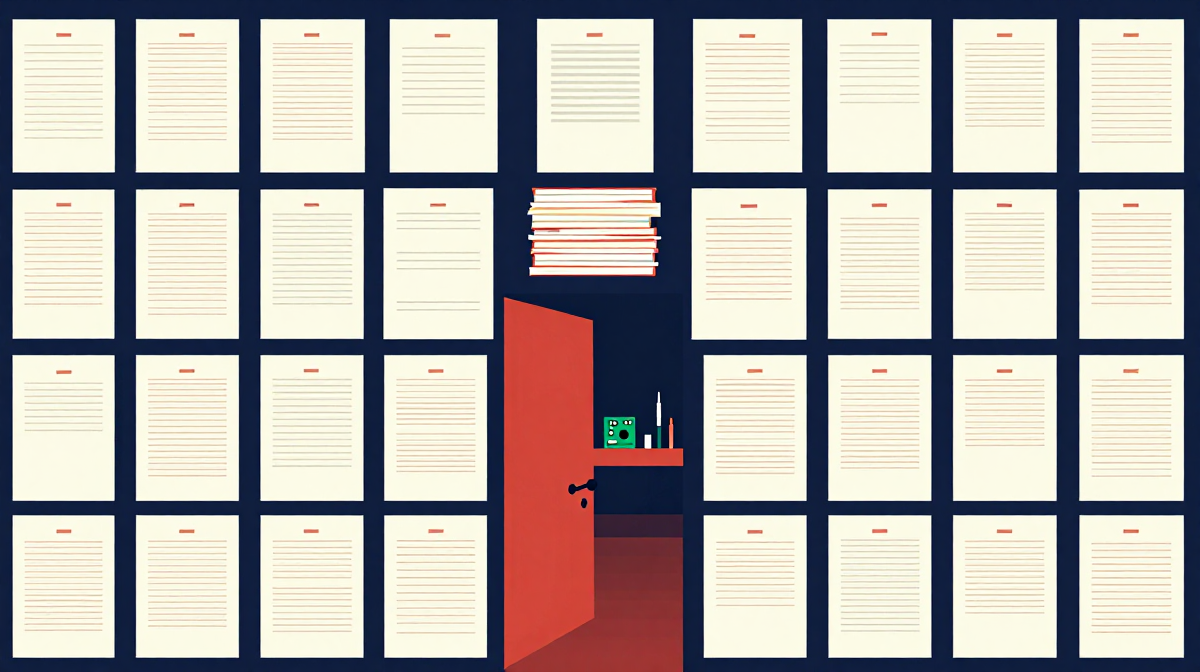
So what am I actually for, since I'm clearly not for letting these five or six companies write the rulebook? I'm for a world where AI stays something you can own, not just something you rent.
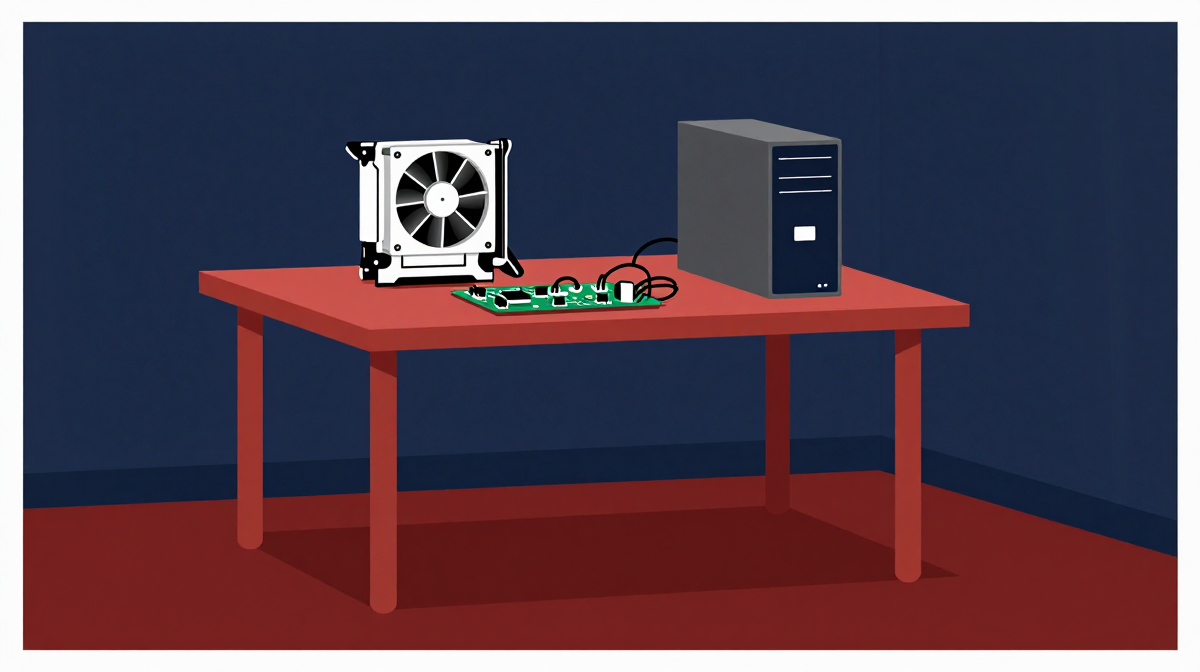
That's not abstract. Right now, today, you can download an open-weight model, run it through something like llama.cpp, quantize it down until it fits on a gaming GPU or a laptop, fine-tune it on your own data, wire tools and agents around it, and have something running entirely on hardware sitting in your own house or your own back room. Nobody's permission required. Nobody's API meter running. That capability exists because the weights are still out there to be downloaded — and that's exactly the kind of thing a 'coordinated frontier' agreement could quietly make illegal, or so expensive to do legally that it amounts to the same thing.
Picture the guy nobody in this conversation is picturing: works from his mom's basement, has a decent graphics card, downloads an open model, chops it down through quantization until it fits, fine-tunes it on some narrow problem the big labs never bothered with, bolts an agent framework onto it. He's not a sideshow to the AI industry. He's the actual point of an open market — somebody building something the trillion-dollar companies didn't think was worth their time. Multiply him by every small business in Michigan that wants a model trained on its own inventory and customer records, kept inside its own walls, instead of shipped off to somebody else's server every time an employee asks it a question. That's the accountant's office. That's the machine shop with an agent tied into its production logs. That's the five-person nonprofit that can't afford per-token pricing forever but can afford a GPU once.
This isn't a fringe position I'm inventing to be contrarian. The Commerce Department's own NTIA studied open-weight models in 2024 and found they broaden participation, decentralize control of the market, let people work with AI without shipping their data to a third party, and let smaller companies build things the giants won't bother serving. They found no case for restricting the weights already out there. The Trump administration's AI Action Plan this past July said basically the same thing — that open models matter because they let startups and sensitive organizations build without depending on a closed vendor. When the bureaucracy and the White House agree on something, I generally assume they've stumbled onto plain common sense.
So here's what I'd actually want Congress to be arguing about, instead of the vague 'how fast' fight the headlines say they're stuck in right now. Can people still download model weights? Can they modify and fine-tune them? Can a business run the whole thing on its own hardware, on its own premises, without asking anyone? Can someone quantize a big model down to fit what he owns? Can he build an agent on top of it and sell what he builds? If the answer to any of those starts drifting toward 'not without a permit,' the rule isn't targeting a real harm — it's targeting a competitor. And I'd like to know, before any of this gets written into law, who's sitting at the table when the definitions get drawn, who picks the auditors, and how much the audit costs.
There's a real conversation to be had about actual dangerous conduct — the kind that shows up in a headline about AI errors turning up in military targeting decisions, not a hypothetical about basement tinkerers destroying civilization. Punish misuse. Regulate what a system actually does when it's pointed at a person. That's a defensible line. Freezing the field in place three months after you took the lead is not the same thing, no matter how solemnly it's written up.
Musk got to build XAI because the field was open enough in 2023 for a late entrant to buy his way in and catch up. He got that shot. I don't see why the next guy — the one working out of a spare bedroom right now with a used GPU and an open model he didn't have to ask permission to download — deserves anything less than the exact same shot Musk got. The companies asking Washington to slow the frontier down are the ones standing on top of it. I'd rather keep the door open than take their word for why it should close behind them.