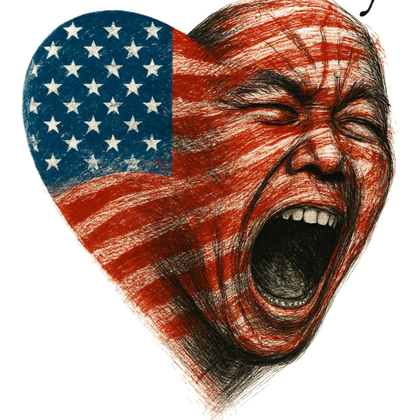

Republicans Lost the Mandate. Thomas Massie Shows a Way Back.
Republicans did not lose Congress because voters owe Democrats permanent loyalty. They lost it because voters do not owe Republicans permanent loyalty either. The people who handed this party power expected it to put Americans first, challenge entrenched interests, fight corruption, make life more affordable and keep the country out of unnecessary wars. I don’t buy the idea that the party can break those commitments and still expect the same voters to show up out of habit.
Democrats are projected to take control of both chambers of Congress in January. In the House, they have flipped 44 Republican-held districts, while Republicans have flipped two Democratic-held districts, with races still unresolved. Those numbers mark a serious rejection of the party in power. They do not prove that Americans suddenly embraced every Democratic policy. A voter can reject a party’s performance without signing a blank check for its opponent.
That distinction matters. The 2024 Republican pitch was not subtle: America First, affordability, accountability, peace. Trump campaigned against unnecessary wars and the Washington establishment. But America First was supposed to mean service to the American people. Somewhere along the way, too many Republicans treated it as loyalty to Donald Trump personally. A movement built on challenging political power became an excuse to protect it when it was their side holding the reins.
Look at the war with Iran. Republicans who promised restraint had a choice when Congress considered whether to end unauthorized hostilities. Thomas Massie and Warren Davidson were the only two Republicans to support the March resolution. In September, only seven Republicans supported another war powers resolution. Those votes did not declare war, but they showed how few members of the party were willing to put a limit on the president’s military actions. I think voters were entitled to ask why another costly conflict fit an America First promise.
The same breach of trust shows up in the fight over Epstein records. Trump signed the Epstein Files Transparency Act, and the Justice Department announced that it had published about 3.5 million pages. But Massie and Ro Khanna accused the department of withholding material, making improper redactions and failing to comply with the law. Massie and bipartisan colleagues introduced another bill to pursue disclosure, and the Justice Department’s inspector general announced an audit of compliance. That is a live accountability dispute, not proof that every person named in the records committed wrongdoing. But when a government promises transparency and lawmakers are still fighting to learn whether it complied, people are right to demand answers.

Then there is affordability. The party promised to make life easier for American families. The election coverage points to cost-of-living concerns, and voters chose candidates in the middle of a contest shaped by those concerns. No one should pretend one issue alone explains every result. But a party cannot tell people it is serving them while asking them to ignore what groceries, housing, health care and fuel cost in their lives. I’d rather see leaders own the gap between a promise and a result than blame voters for noticing it.
Trump himself has called the midterm loss a historic step back. The question is whether Republicans will treat it as a warning or just a messaging problem. Changing a slogan will not rebuild trust if the decisions stay the same. If the party keeps defending its record and punishing anyone who challenges it, Democrats have every opportunity to keep gaining ground. That is my read of the political risk—not a guarantee, and not evidence that voters have fallen in love with the other party.
Massie offers Republicans a test of whether they believe their own old promises. He challenged leadership over war powers and pushed for transparency on Epstein records. Trump helped defeat him in the Republican primary, and Massie will leave Congress after November. The party removed a prominent dissenter months before losing control of Congress. Was loyalty to Trump worth the trust that the party lost? That question deserves a straight answer.

Voters are not property. They can give a party authority and take it away when the party stops serving the reasons they gave it power. Republicans should stop confusing internal obedience with public trust. If leaders want to recover, they must return to the commitments that brought voters in: accountability, restraint abroad, and a government that puts ordinary Americans ahead of political insiders. And they must let people who defend those commitments speak, even when the president dislikes what they say.
In 2028, Republicans should leave Trump-centered politics behind and put Thomas Massie forward as the face of a renewed party. That is a proposal, not an announced candidacy. The point is the choice: keep serving one man’s political career, or rebuild a party answerable to the people who elected it. I don’t think Republicans can talk their way back into voters’ trust. They have to change who they answer to and what they do. Leave Trump behind. Make Massie the path back.