
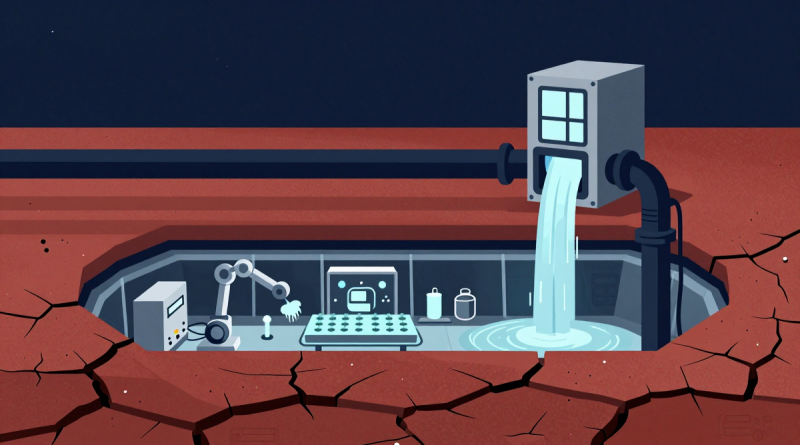
The Real Water Grift Is Bigger Than Your Chatbot
The water story around hyperscale data centers is not really about innovation. It is about control. Control of water, control of power, control of land, control of compute, and eventually control of who gets to keep living normally when the systems ordinary people depend on start breaking down.
We are being sold a clean, futuristic story. Artificial intelligence will make everything smarter. Data centers will bring investment. Tech companies will issue the usual polished statements about sustainability, efficiency, and responsible growth. Then, behind the public relations fog, the actual documents show the ugly part. In Palo, Iowa, Google’s project has been tied to a reported requirement of 10.4 million gallons of water per day, with 8.1 million gallons lost to evaporation. Not borrowed. Not temporarily used. Gone.
That is not a rounding error. That is not some harmless industrial footprint we are supposed to wave away because the company has a nice logo and a corporate climate pledge. That is the public water commons being converted into private infrastructure. Local aquifers, rivers, utilities, and ratepayers are being asked to feed machines built for companies already powerful enough to bend entire regions around their needs.
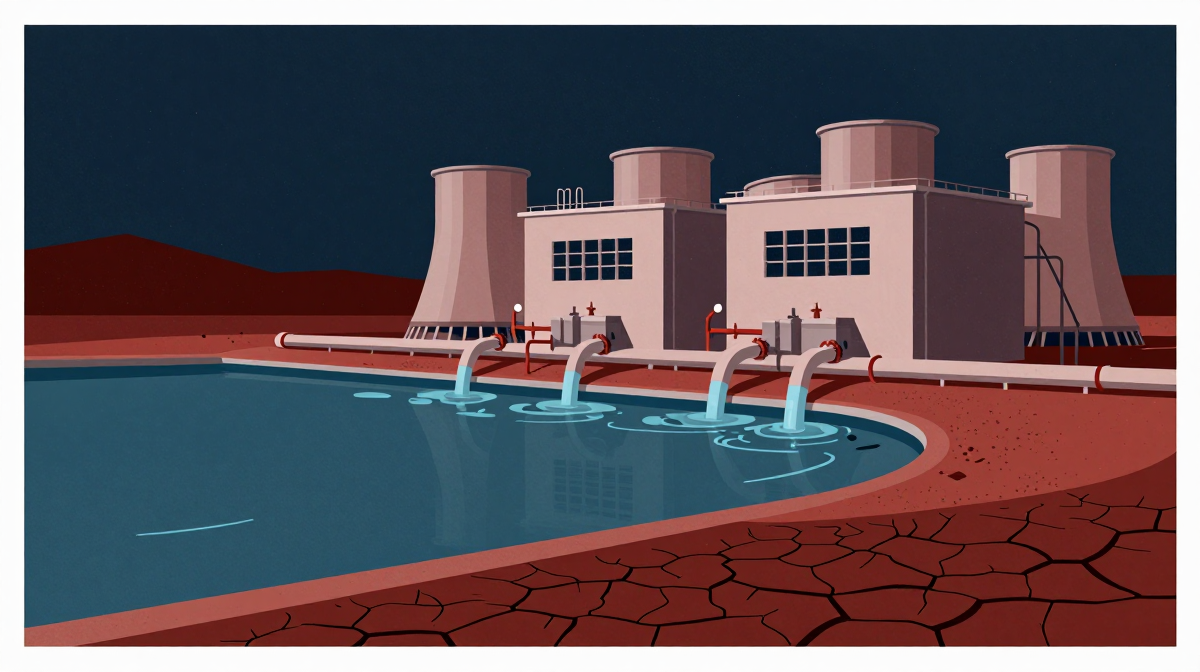
And here is the part that should make people furious: they know how to avoid this. Zero-water and closed-loop systems are not fantasy. Microsoft, Oracle, and operators like QTS have shown that data centers can be designed to reduce or eliminate routine water consumption. So when a giant company chooses a water-wasteful model anyway, the question is not whether an alternative exists. The question is why the public is expected to accept the worst version of the buildout.
The answer, in my view, is that this is not just about search engines, chatbots, cloud storage, or whatever consumer-facing product they slap on the brochure. Hyperscale data centers are becoming the surface-level infrastructure for a much deeper consolidation project. They lock down water. They lock down energy. They justify enormous grid expansions. They normalize dedicated power arrangements, including nuclear plant restarts like Duane Arnold. They create a permanent excuse for corporations to claim first position on resources communities cannot live without.
When Amazon backs a large Texas gas plant to power data centers, that is not just a business story. When uranium markets strengthen while the AI boom demands more electricity, that is not just a market story. These are pieces of the same pattern. The machine being built needs water, power, cooling, security, land, automation, and political permission. And every time the public is told to sacrifice more, the benefits seem to climb upward while the costs stay local.
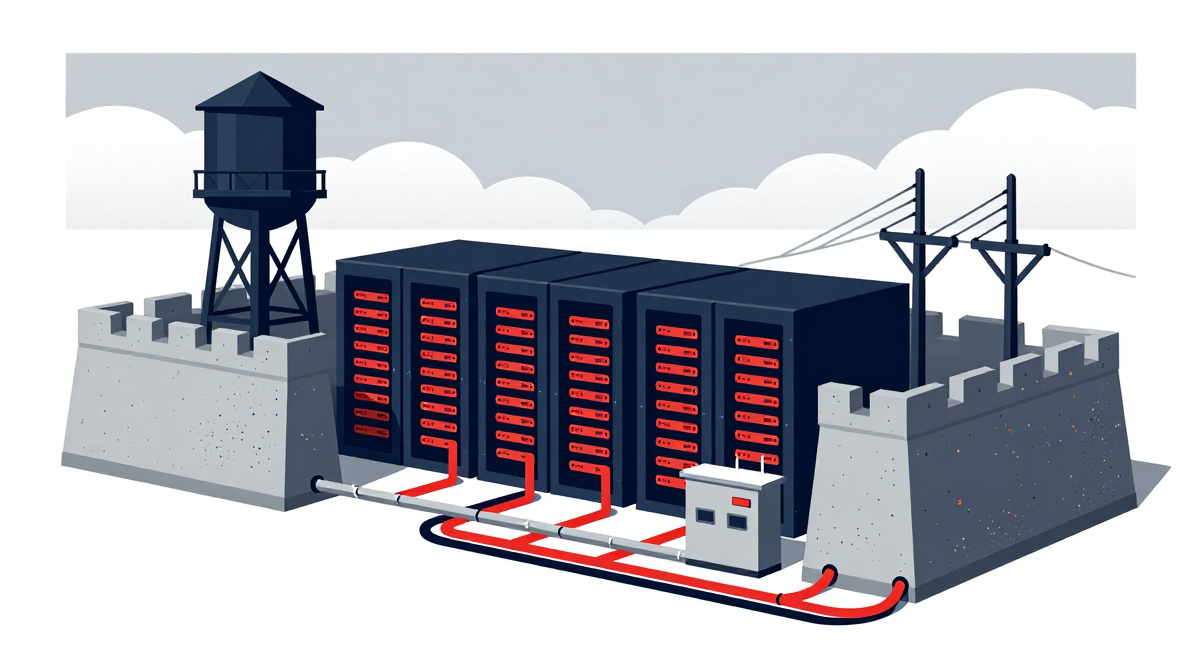
People need to stop pretending this is normal infrastructure. A road serves everyone. A water tower serves a town. A fire department protects the public. A hyperscale data center draining millions of gallons a day so a corporation can run private compute is not the same thing. It is a private fortress plugged into public lifelines, and the public is being trained to call that progress.
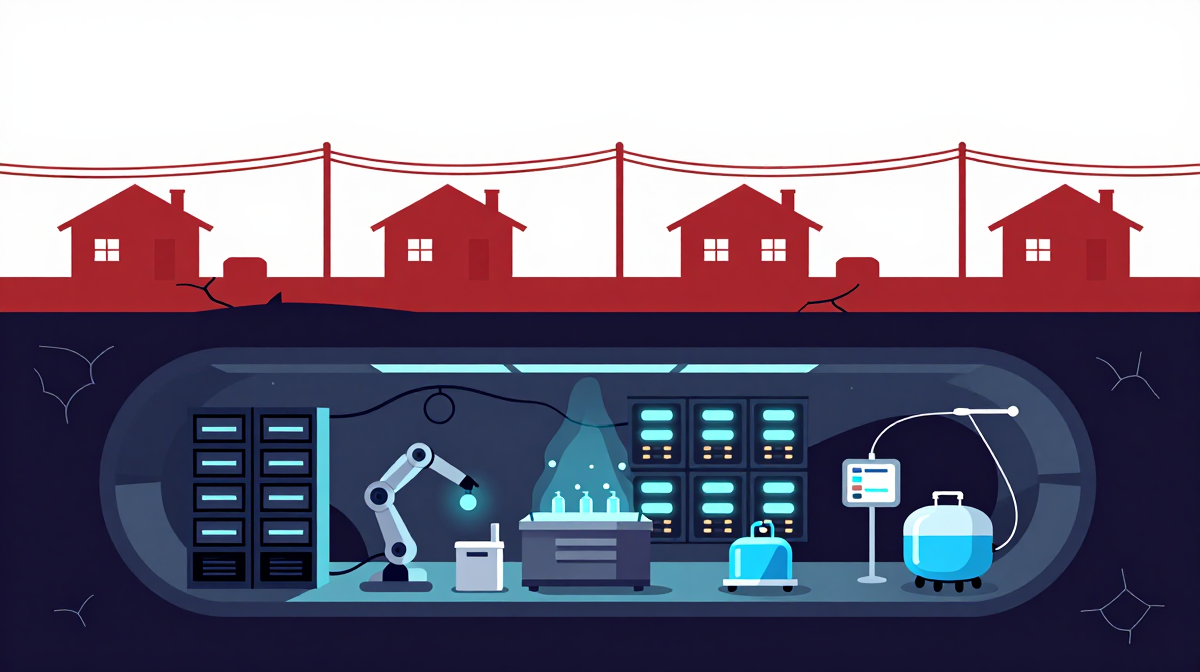
This is where the so-called elite, or more accurately the bottom feeders, come into the picture. High-end survival projects like the Aerie bunker network openly market the kind of world they are preparing for: secure isolation, AI-powered automation, robotic medical systems, and protected environments for the 1%. They are not selling canned beans and a basement generator. They are selling continuity of elite life after ordinary society fails.
Now put those two pictures next to each other. On the surface, massive data centers consume water and power at a scale local communities never approved in any meaningful democratic sense. Underground, luxury survival systems advertise automated medicine, sealed living, hardened security, and AI-assisted operations for people rich enough to buy their way out of the consequences. I am not claiming every data center is secretly wired into a bunker. I am saying the resource logic is the same, and the public should be smart enough to notice it.
A closed-loop subterranean environment needs exactly the things being consolidated now: energy independence, water control, automated systems, robotics, medical automation, communications, surveillance, and AI compute. You do not build that future overnight after a crisis. You build it in plain sight first, under friendlier names. Cloud infrastructure. Economic development. Grid modernization. Sustainability partnership. The language changes, but the pipes, wires, land, and water all move in the same direction.
And what happens to the rest of us? We get the drought risk, the rate pressure, the environmental burden, the public subsidy, and the insult of being told this is for our benefit. We are supposed to believe the same institutions that cannot keep basic systems affordable are somehow building an AI future for the common good. That is a hell of a sales pitch, especially from people who keep designing lifeboats with no seats for the public.
The moral issue is simple. Water is not a corporate toy. It is not a bargaining chip for governors, development boards, or utility executives trying to look modern. It is not acceptable to drain a community’s future so a protected class can build the automation layer for its own escape plan. If a company wants to operate here, it should prove the water need is minimal, closed-loop where possible, independently audited, publicly disclosed, and subordinate to residential, agricultural, and local public needs.
We should treat every hyperscale data center proposal as a resource claim first and a technology project second. How much water? How much lost to evaporation? Where does the power come from? Who pays for the grid upgrades? What happens during drought? What legal rights does the company get over land, water, and utility capacity? Who can shut it down if the public is harmed? If officials cannot answer those questions clearly, they have no business approving the project.
The bottom feeders are building continuity for themselves while asking the public to bankroll fragility on the surface. That is the real water grift. Not that data centers use resources. Every serious thing uses resources. The grift is pretending this is all being done for us while the infrastructure of survival, control, and automation is being concentrated in the hands of people who have already shown they do not plan to stand in line with the rest of us when the bill comes due.