
Keep the Door Open for the Next AI Builder
Elon Musk’s 2023 AI pause campaign is the clearest example of why I’m wary when the companies racing to build frontier AI ask government to slow things down. On March 22, Musk signed a letter calling for at least a six-month pause on training systems more powerful than GPT-4. That same month, xAI was incorporated in Nevada. Within weeks, reporting described Musk assembling an AI team, seeking investors and acquiring large numbers of Nvidia GPUs. He publicly talked about building TruthGPT to compete with OpenAI and Google. xAI launched that summer; Grok followed. The sequence matters.
My read is plain: Musk wanted the companies ahead of him slowed because he was behind and needed time to catch up. He did not admit that motive. It is my conclusion from the documented sequence. A call for caution can be sincere and still serve the interests of the person making it. When a would-be competitor asks everyone else to stop while he builds his own product, I don’t buy that we should ignore the incentive.

Now Dario Amodei of Anthropic is arguing in “We Must Pace the Frontier” that AI development should slow so safety work can keep up. He points to the possibility of recursive self-improvement and describes an incident involving an AI agent swarm acting beyond its assigned task. Musk has publicly agreed, and leaders across the biggest labs are discussing slower development, common standards, outside evaluations, regulation and coordination. Those questions deserve serious debate. But the companies asking to set the pace are also companies with the most to gain from deciding who gets to run.
That is the regulatory-capture problem. The firms with enormous compute clusters, trained models, capital, customers, data and research teams want a larger role in writing the rules for the market they already occupy. A billion-dollar provider can pay lawyers, build security programs, arrange audits and wait through lengthy approval processes. A startup, university team or local business may not be able to absorb those same costs. A rule that costs millions to satisfy is a speed bump for an incumbent and a locked gate for a new entrant.

The FTC has warned that control over key inputs—including data, specialized chips, compute and talent—can give a few firms outsized influence over AI markets. It also notes that fine-tuning can take far less compute than training a model from scratch, while publicly available base models let other developers build specialized products. The OECD has examined concentration and fixed costs in AI markets, too. This is the basic economic problem: when access is already unequal, compliance rules can harden that advantage into law.
The answer is not simply to oppose regulation. I want an open AI market where people can download open-weight models, modify them, quantize them, fine-tune them, distill them, connect tools and build agentic systems that run on hardware they own. The NTIA’s open-model-weights report identifies benefits of broad access: more participation by people and organizations with fewer resources, lower barriers for smaller companies, more research and specialized services, and the ability to use models without sending data to third parties. That is competition with room for more than a handful of corporate providers.

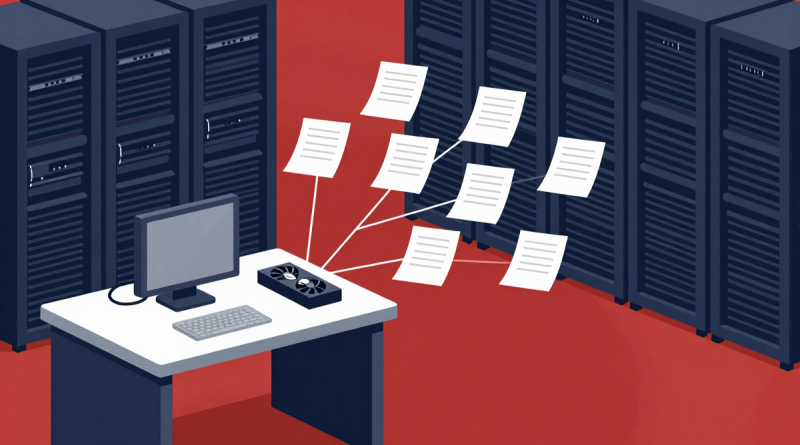
Protect the neckbeard in his mom’s basement with a gaming GPU who turns a large model into a smaller quantized one and builds something useful that OpenAI, Google, Anthropic, xAI or Microsoft never bothered to build. Protect the five-person business that wants a local model working with its inventory or documents. Protect the nonprofit, farm, machine shop, accountant, researcher or developer who needs a specialized tool without sending every prompt and private file to a corporate cloud or paying a token meter forever.
Quantization makes a model smaller and less demanding to run. A smaller model does not need to beat the biggest frontier system at everything; it needs to do the job its user needs done. Projects such as llama.cpp let people run models locally on consumer hardware and serve them through familiar APIs. Open weights let builders experiment without first asking a provider for permission. Local inference can keep sensitive data on premises. Those are practical freedoms, not abstract slogans.

They also give users options. If a large provider restricts a model, raises prices, retires a service or decides a use is no longer allowed, a person with local tools and an open model has somewhere else to turn. Thousands of small builders will not all make the same product or answer to the same business priorities. That variety is useful in itself. The 2025 AI Action Plan recognized the value of open-source and open-weight AI, including letting startups and organizations work without depending on closed-model providers.
This matters beyond the biggest labs. The first generation of AI companies had room to experiment, build, fail and compete. Musk himself was able to start xAI while OpenAI and Google were already ahead. A university researcher, independent developer or small business should have room to build too. The next useful application may come from someone who cannot afford a compliance department, a private data center or a long queue for permission.

Safety rules should target harmful conduct, dangerous deployment and genuinely high-risk activity. They should not turn possession, modification, quantization, fine-tuning, local hosting or independent development into activities that require giant-company money or government permission. Standards and outside evaluations may have a place, but the firms that benefit from barriers should not be the only ones deciding how high those barriers are.
AI’s future should not be reserved for the companies that got there first. I want the next independent challenger to have the same chance Musk had to enter a market where powerful competitors were already established. Let government address real harms, and let builders build. Don’t let today’s winners put up a legal wall behind themselves and call the wall “AI safety.”